01
Environmental Storytelling
Let the environment communicate narrative instead of relying primarily on exposition.
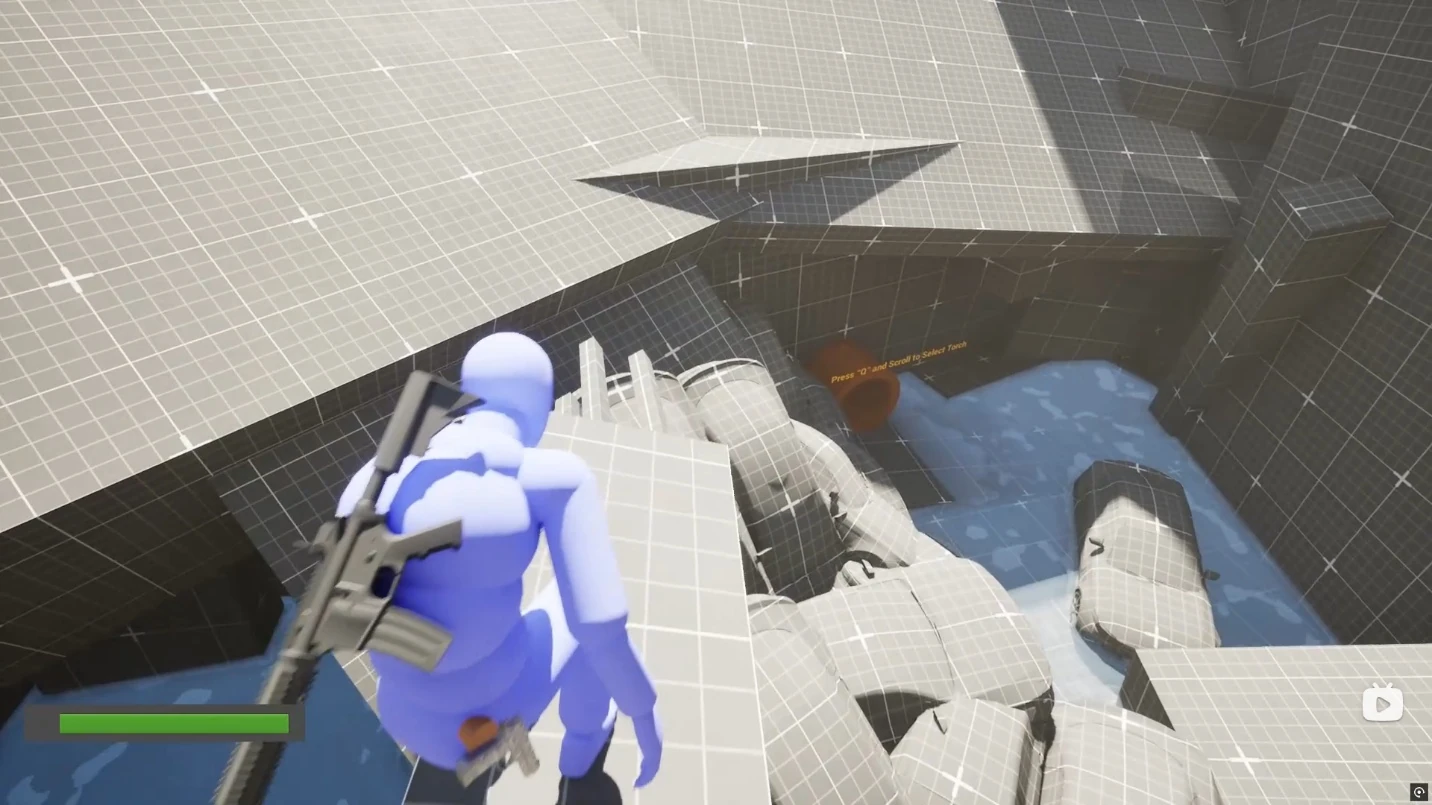
Image directory
1–4 of 4Game Design · Level Design · Narrative Design
Narrative-Driven Survival Action Adventure
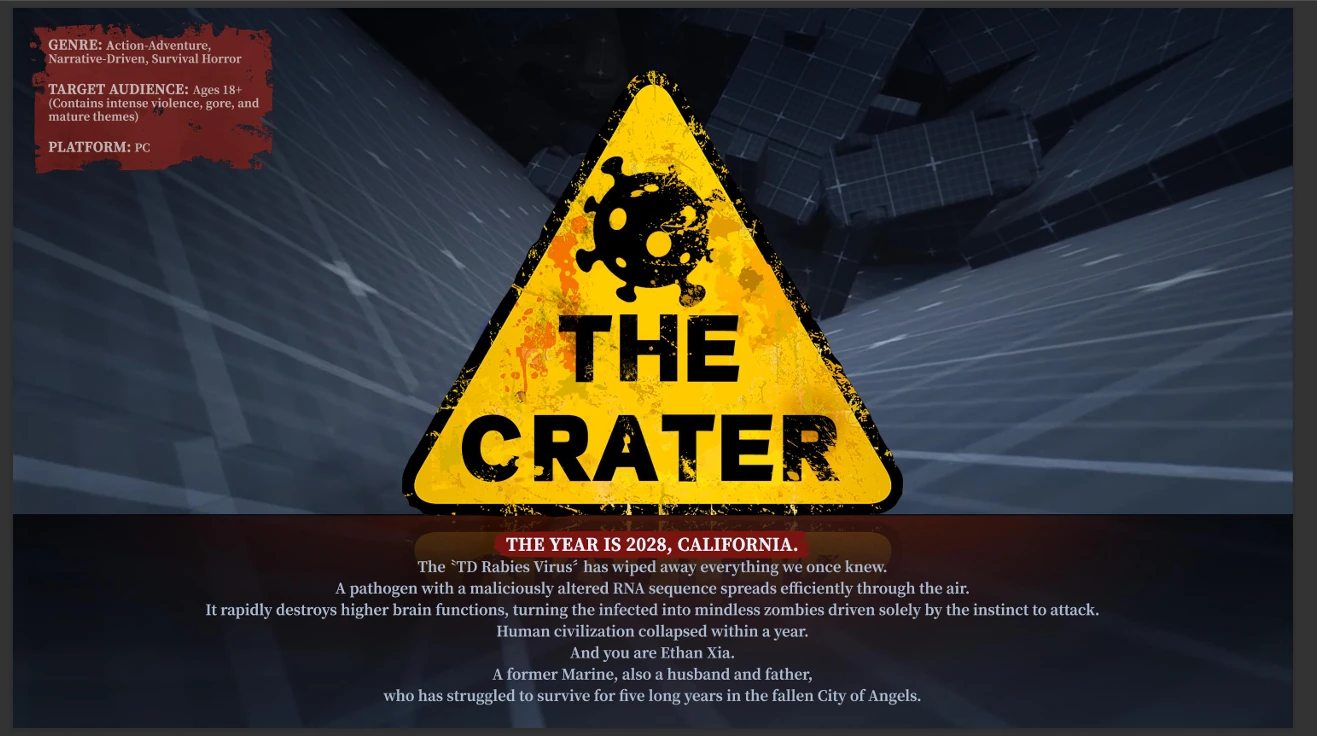
The Crater is a narrative-driven survival action-adventure game set in a devastated Los Angeles five years after a viral outbreak.
Players take the role of Ethan Xia, a former Marine searching for his missing family while navigating interconnected environments filled with infected creatures, hostile survivors, and traces of a collapsed society.
The project explores how environmental storytelling, limited resources, and spatial guidance can create emotional tension without relying heavily on UI or explicit objective markers.
Let the environment communicate narrative instead of relying primarily on exposition.
Image directory
1–4 of 4Guide players through lighting, composition, sound, and object placement rather than mini-maps and objective markers.
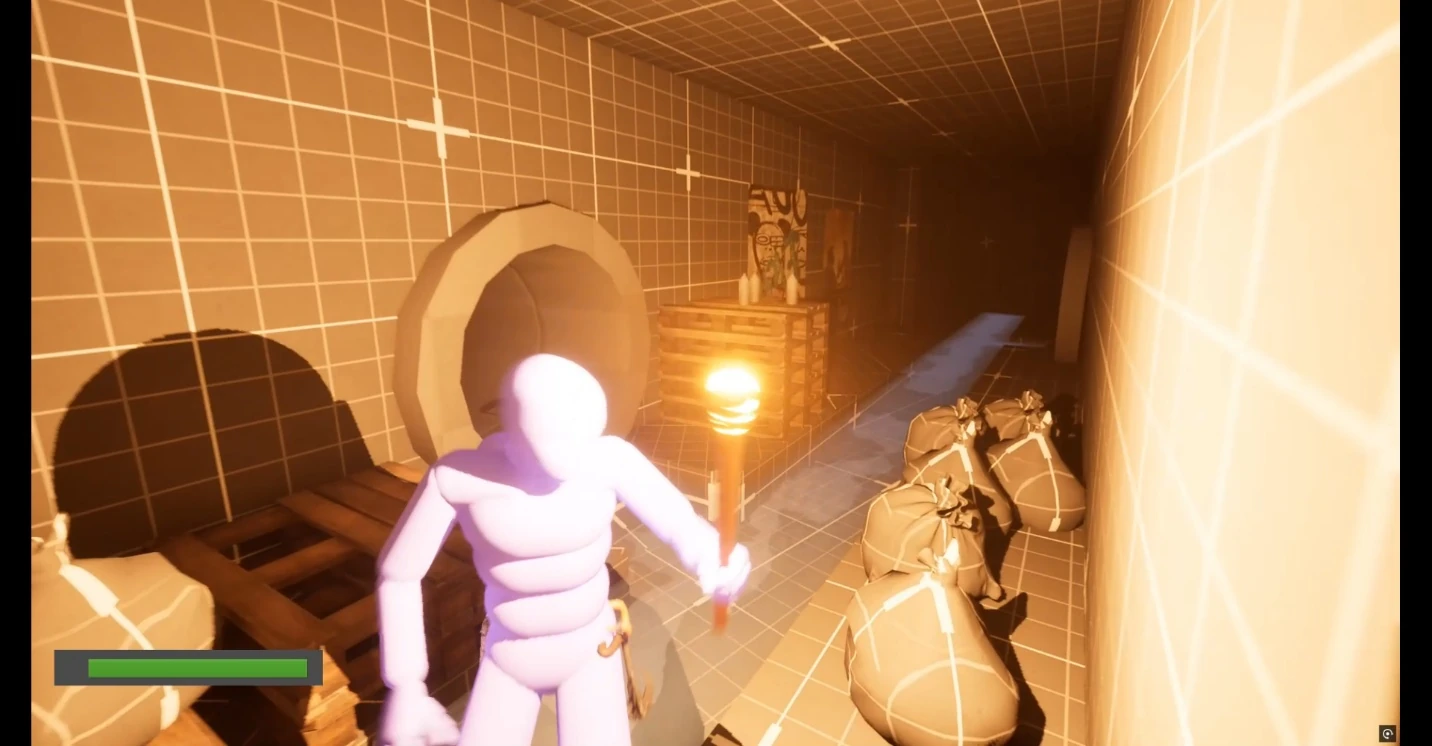
Image directory
1–2 of 2Create tension through limited resources, close-range encounters, exploration, and deliberate pacing.
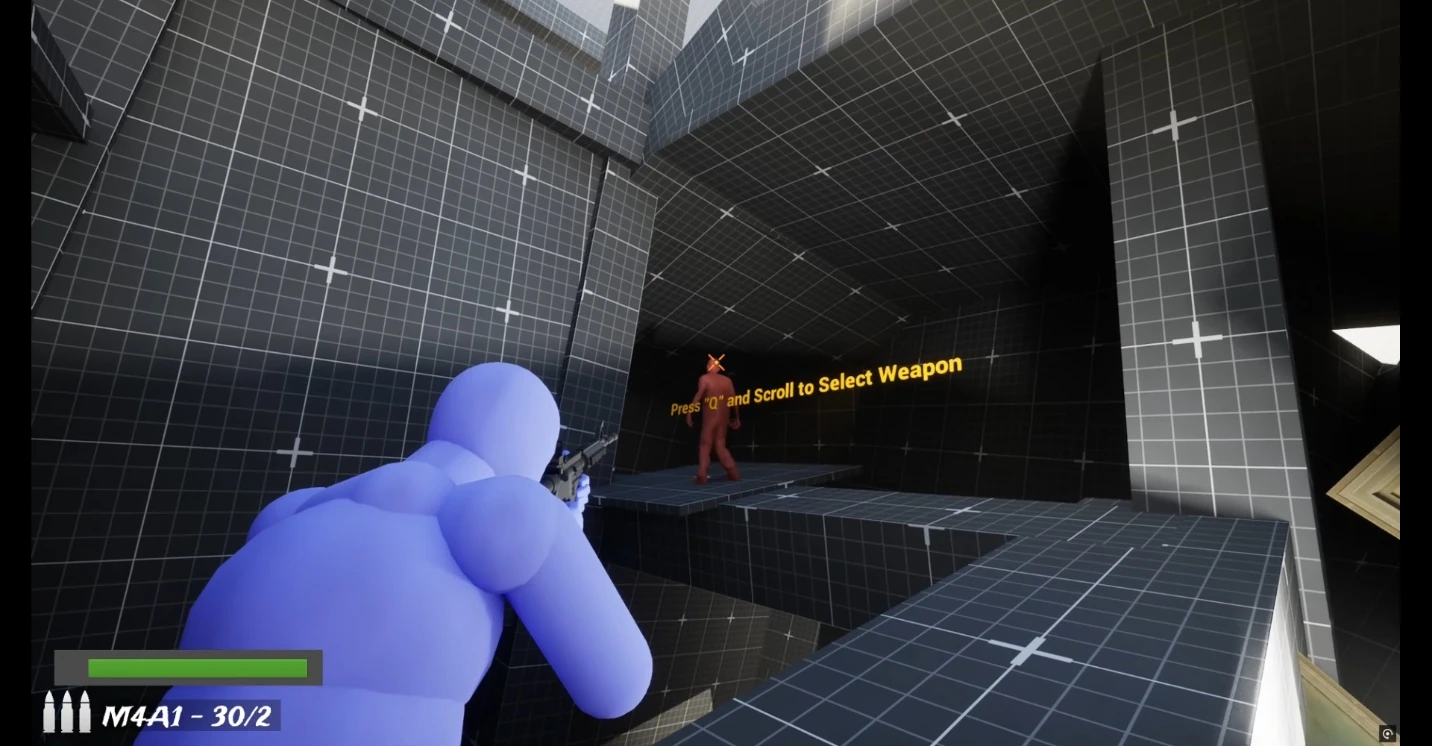
Image directory
1–2 of 2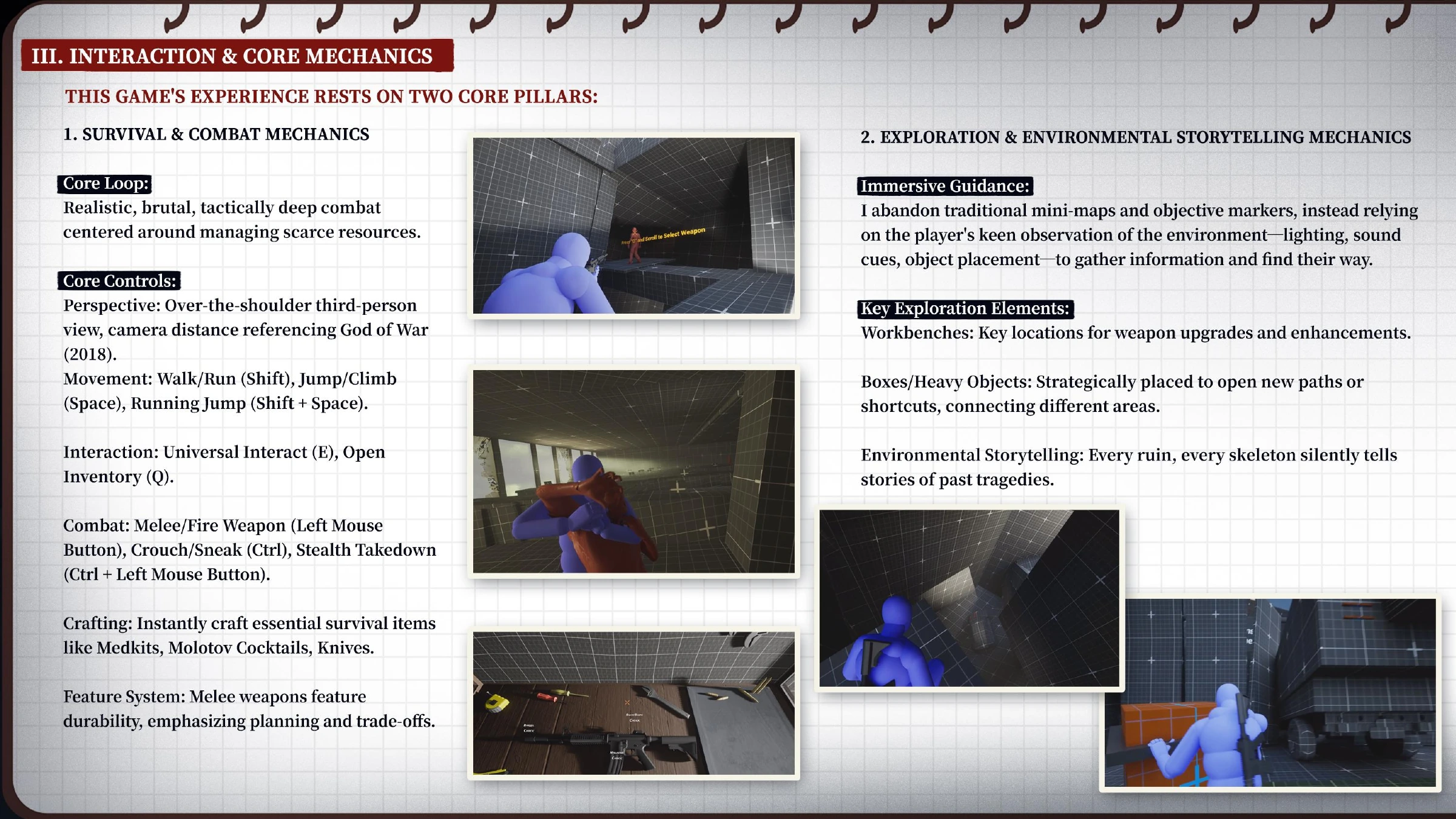
Workbenches, blocked corridors, collapsed structures, and abandoned personal belongings all communicate narrative meaning while shaping the player’s route.
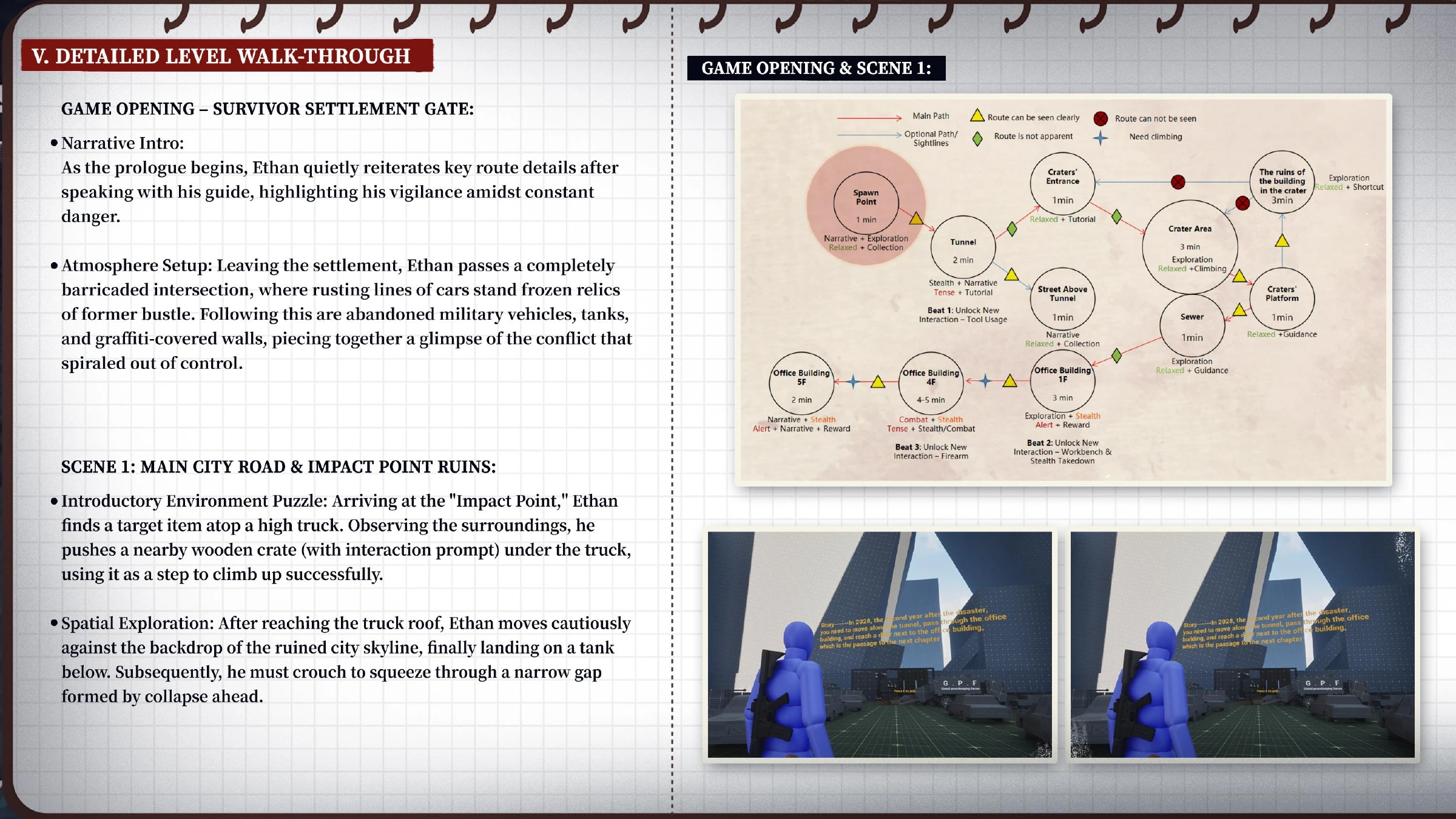
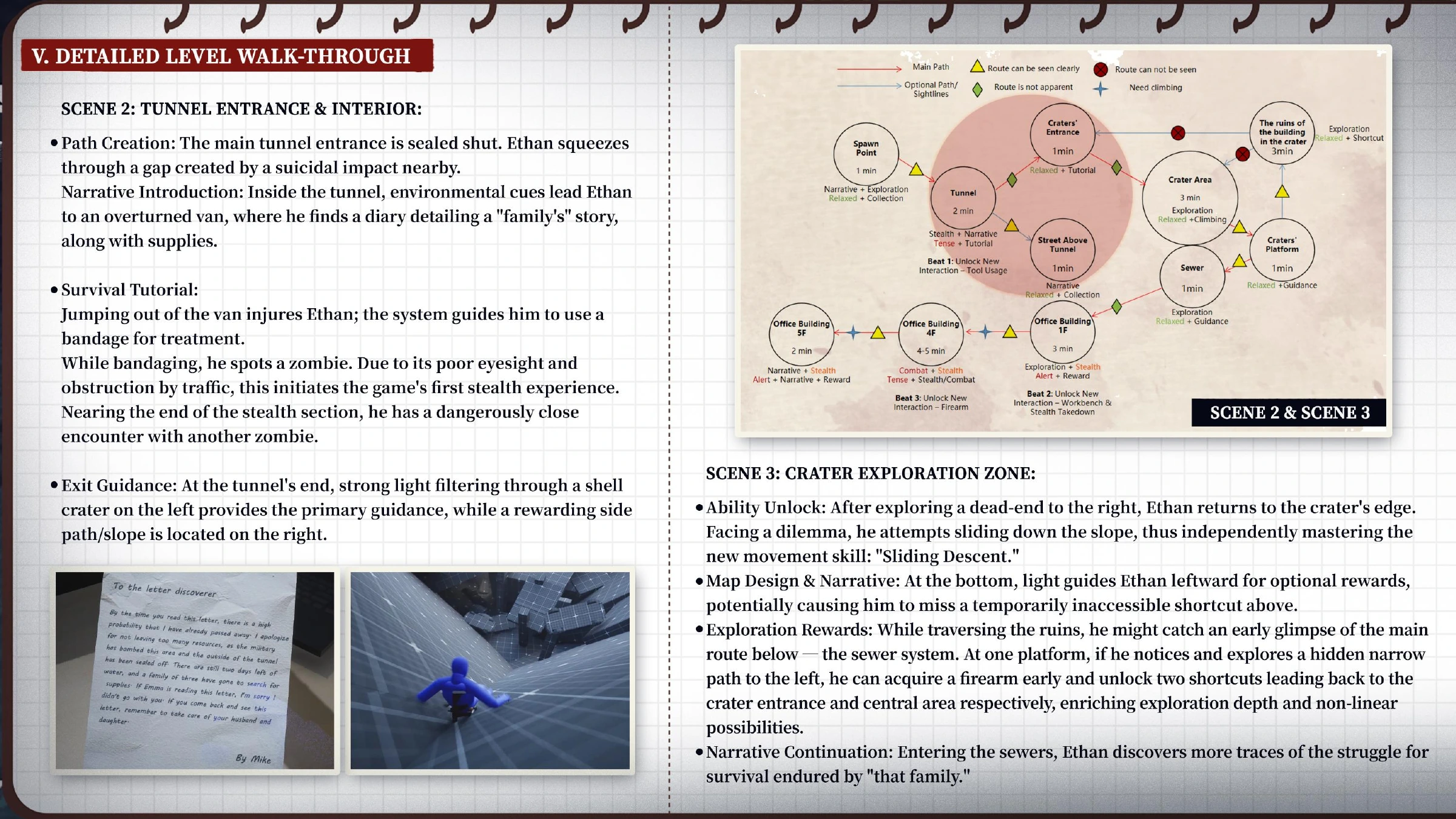
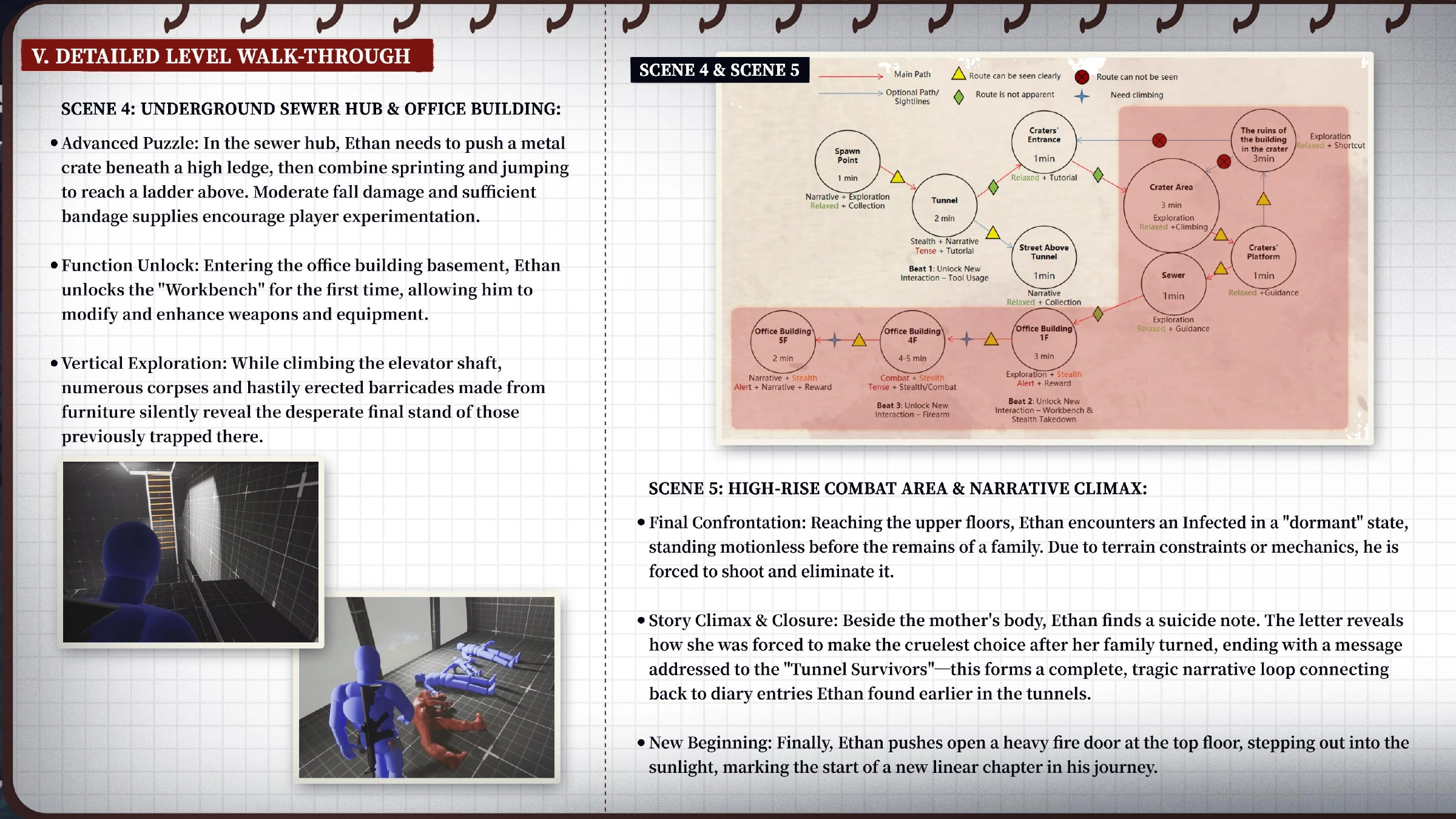
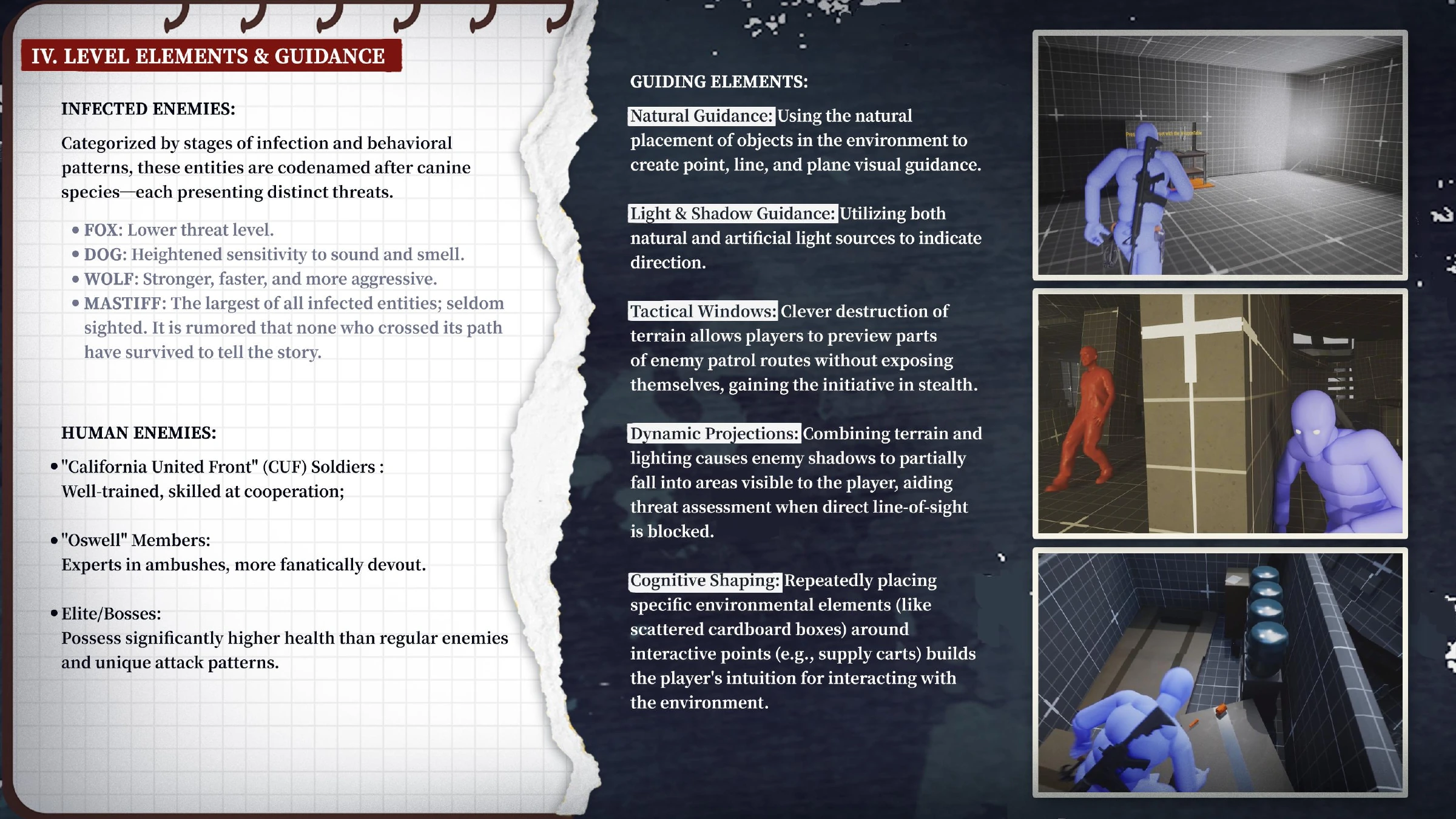
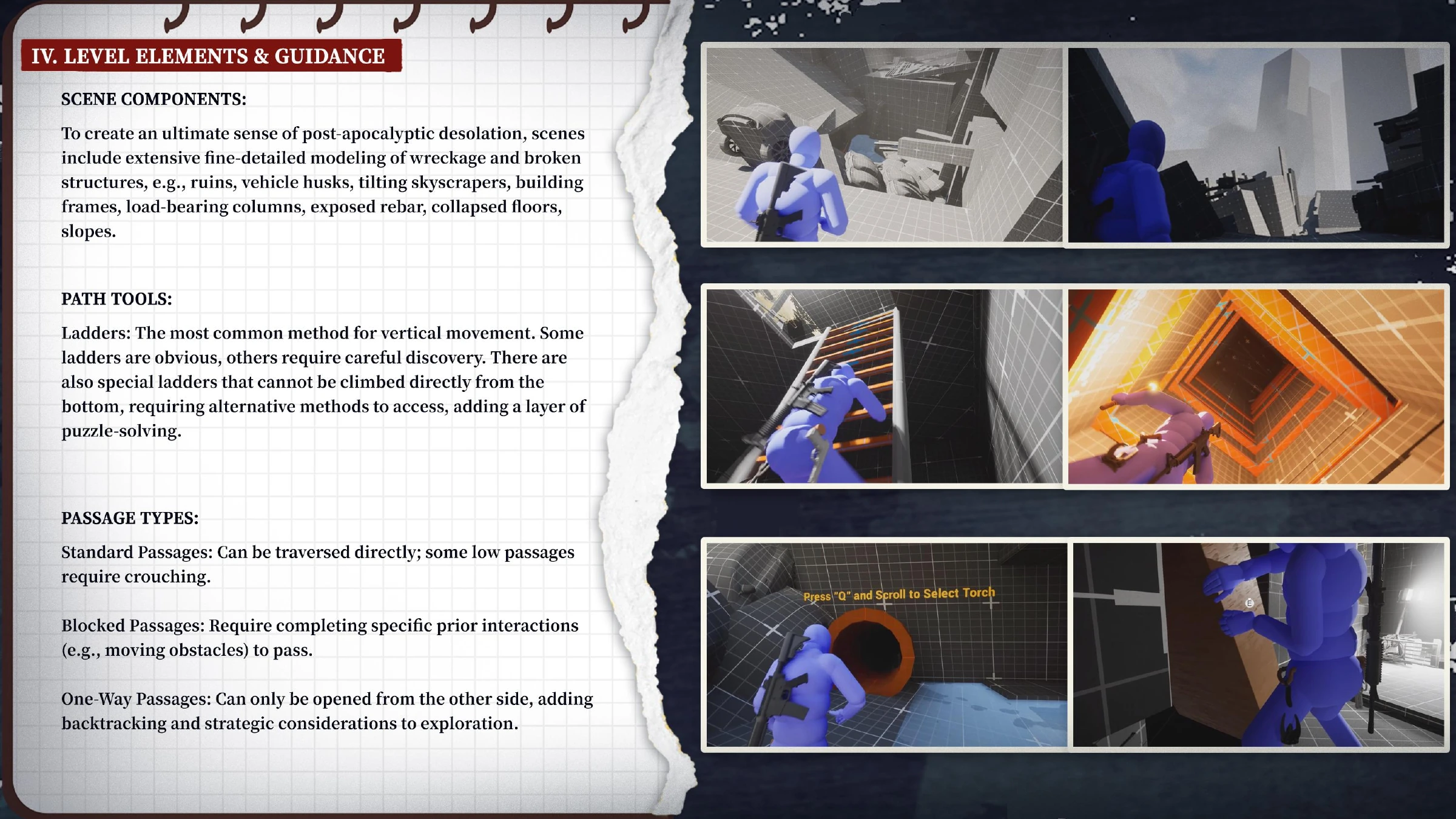
I repeatedly revised enemy placement, traversal routes, and lighting cues to guide players without relying on UI. Playtesting showed that the emotional intensity of certain moments needed better preparation. In response, I refined the introduction, adjusted pacing, and clarified environmental signals to support the psychological rhythm of the experience.
The gameplay video submitted with this application presents a captured walkthrough of the prototype level, demonstrating the interaction loop, combat rhythm, and environmental guidance in motion.