Game Design · Programming · Level Design
ELEMENT
PUZZLE BOX
A 2D puzzle game built around elemental transformation and environmental interaction.
Project Overview
Element Puzzle Box explores how a small set of elemental rules can create complex puzzle interactions. Players absorb, transform, and combine elements such as fire, water, ice, gold, and wind to reshape the environment and reach each level’s goal.
Design Challenge
How can players learn a complex elemental system without written tutorials?
I explored how visual cues, level progression, and environmental feedback could teach players through interaction rather than text.
Core System
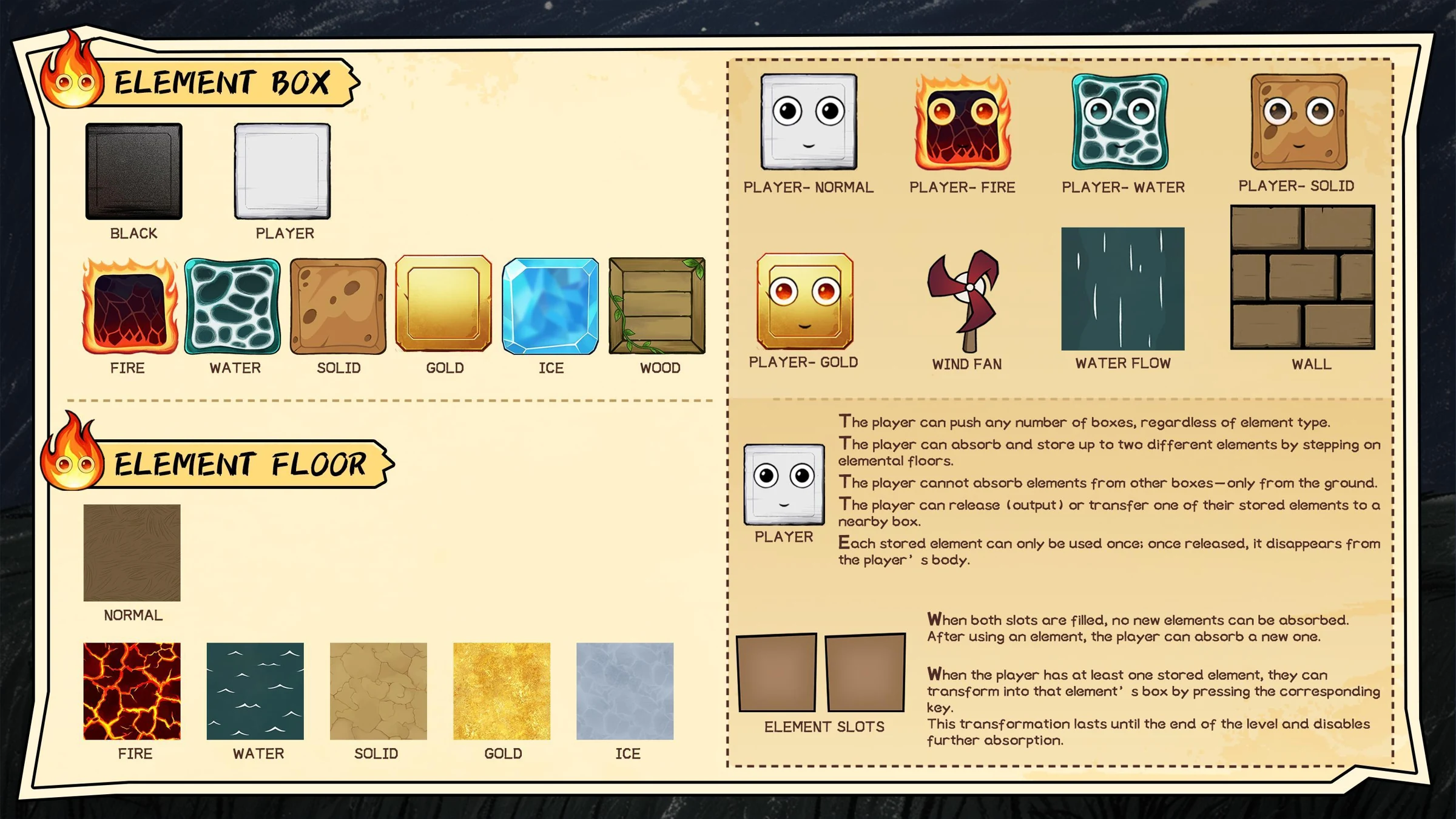
Dual-slot transformation
The player can store up to two elements and temporarily transform into different elemental states. Each transformation changes how the player interacts with objects and environmental hazards.
Environmental Mechanics
Water / Wind / Ice / Collision
Water Flow
Wind Fan
Adjacency & Collision
Absorption & Transformation
Level Design
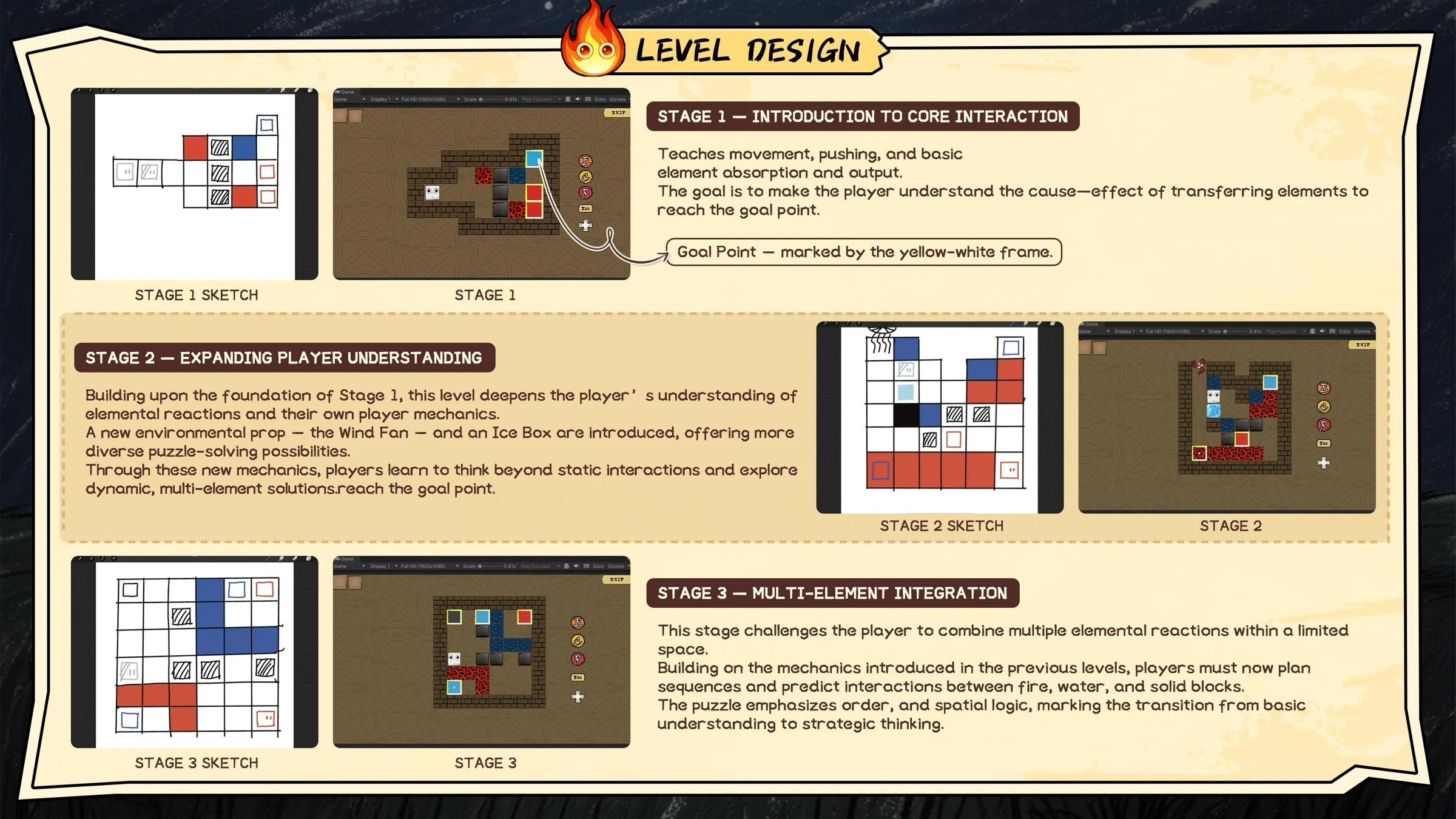
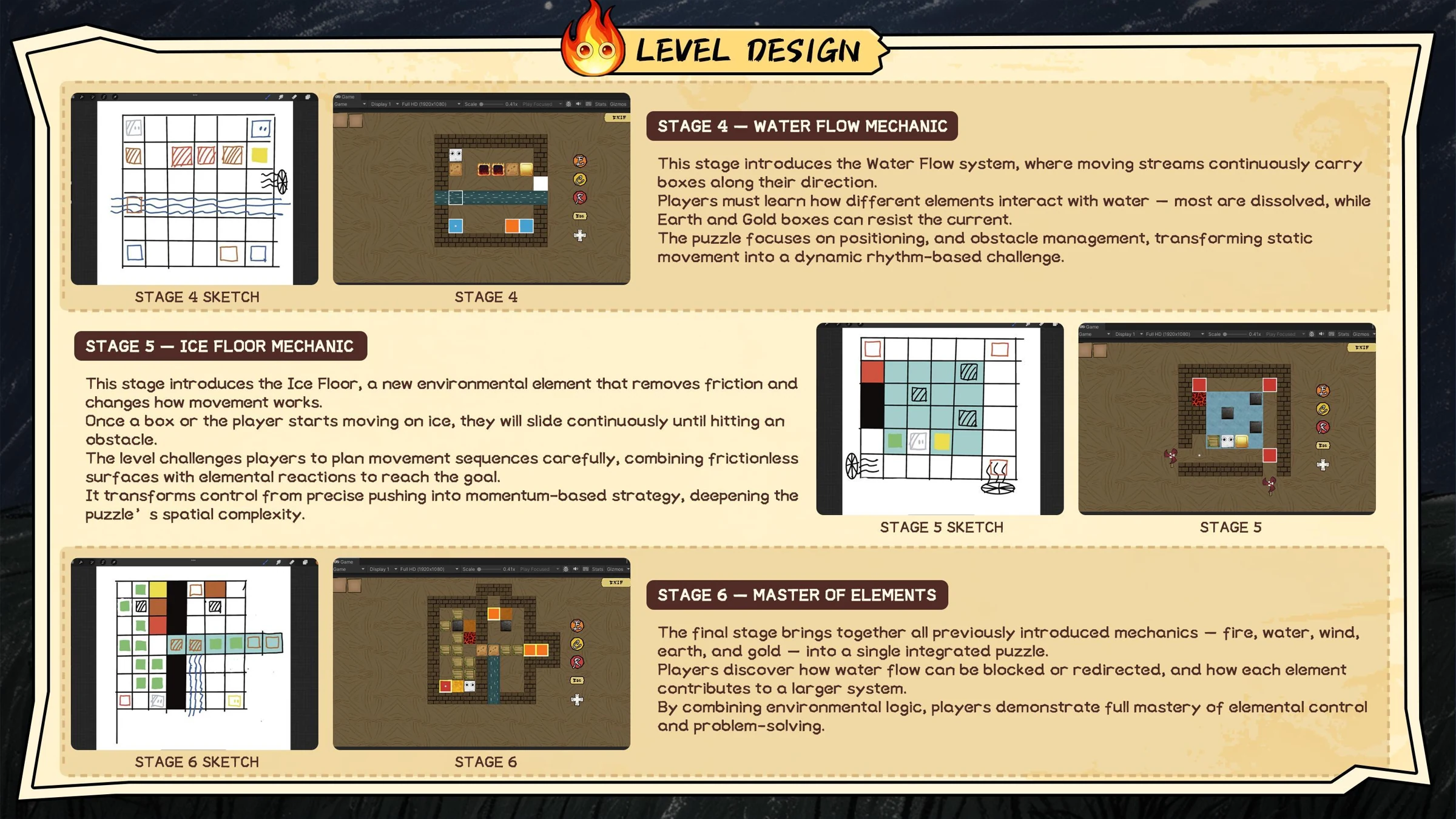
Six levels gradually introduce the system—from basic movement and elemental reactions to multi-step puzzles combining water flow, ice, wind, and multiple elements.
- Stage 1
- Stage 2
- Stage 3
- Stage 4
- Stage 5
- Stage 6
Development
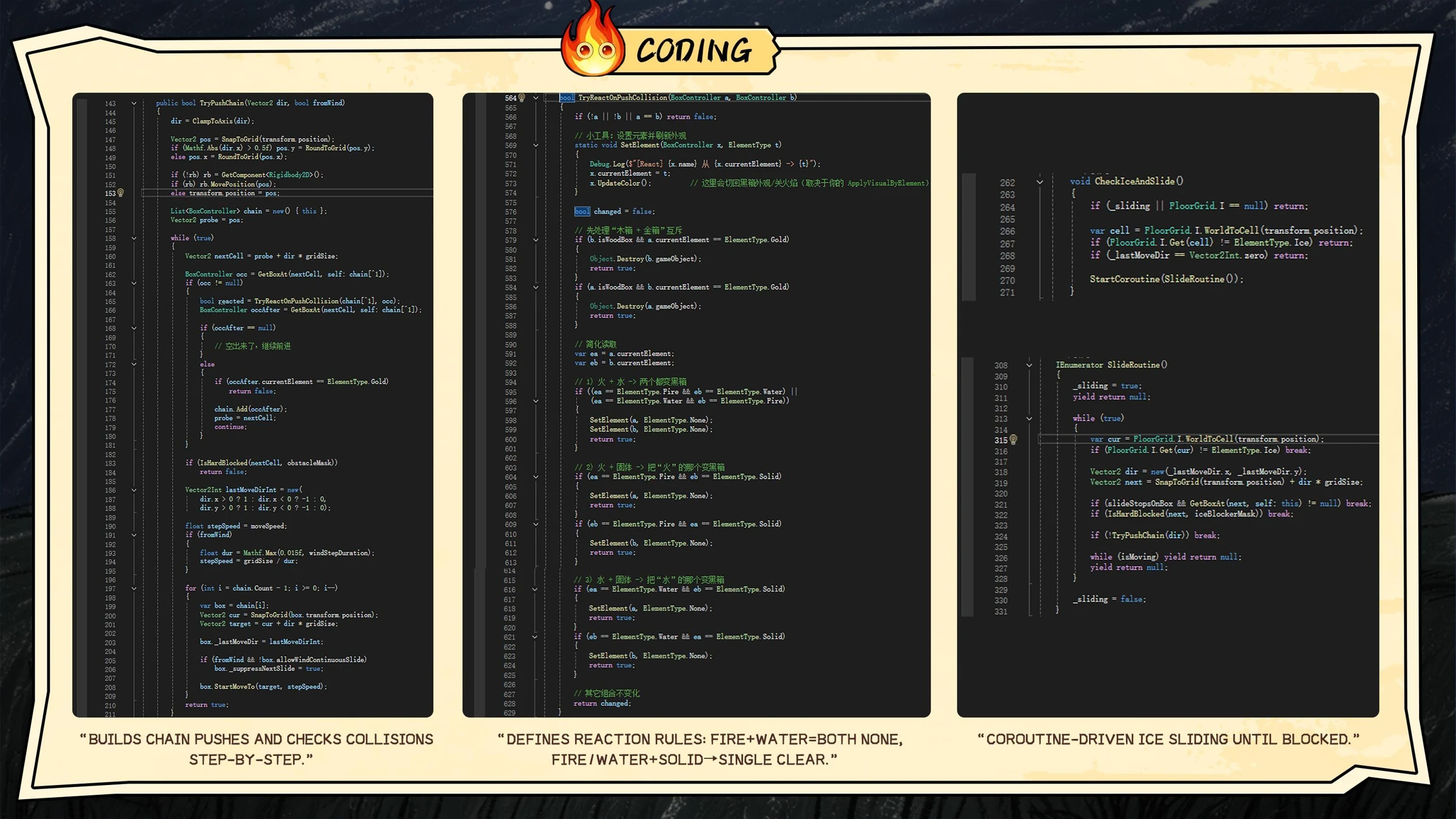
I implemented reusable logic for elemental reactions, collision detection, and continuous movement instead of scripting each puzzle separately.
Playtesting & Iteration
Playtesting showed that players understood the core mechanics, but some adjacency and collision reactions were unclear. I refined visual feedback and redesigned the early levels to improve onboarding.
Unclear reaction feedback
Clearer visual cues + redesigned early levels
Reflection
This project taught me that strong puzzle design is not only about complexity, but about helping players discover the rules through interaction.View Full Project Deck (PDF)